What Is Trading Psychology? It Starts With Which Seat You Read the Chart From
Dylan Forexia7 min read
Trading psychology is how emotion, habit and belief change the orders a trader places: what they enter, hold, close and repeat. Fear, greed and overconfidence are the usual list. We add a question most pages skip: whose seat were you reading the chart from? A calm trader in the crowd's seat still places the crowd's order.
So this page treats the subject as two things: what you feel, and what you were taught to see. The wider map of trading psychology, with its research and a routine, is on the hub. Here are the definition and two dated days. Nothing here promises better results.
What is trading psychology, in plain terms?
It is the gap between the plan you wrote and the order you placed. That gap has three sources.
Emotion. Fear closes a trade early or moves a stop. Greed adds size or chases a candle. Regret and the urge to win a loss back drive the next order. These last minutes, and you can usually feel them.
Habit. Studies of real accounts find the same patterns again and again. Odean's 1998 study of 10,000 US brokerage accounts found "a strong preference for realizing winners rather than losers". You can do that for years and never feel it as a decision. The hub sorts the biases by how each was measured, and it deals with the claim that trading is "90% psychology".
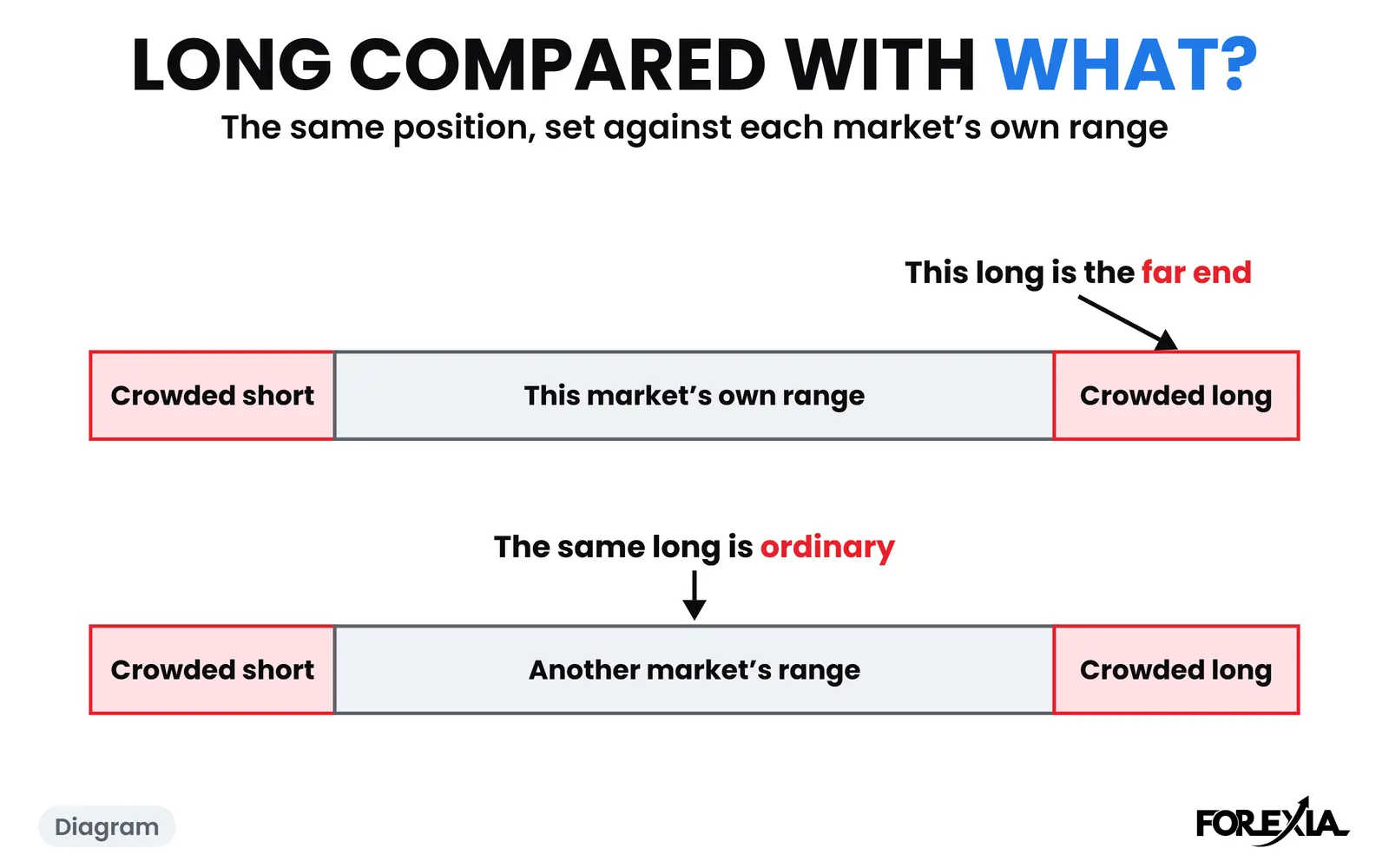
Belief. This is the part most pages leave out. Support, resistance, the double bottom, the breakout and the trendline were learned by millions of people from the same pages. So millions see the same pattern on the same candle, and put the same stop a few pips past the same line. That is not a feeling. It is what you think you are looking at.
We call that view the first of the Three Seats: the retail trader. On both days below the textbook's direction came. What it gave away was where everyone's stop sat.
What does the first seat cost a calm trader?
It costs the same as it costs a nervous one. AUD/USD on Wednesday 2 September 2026 shows why.
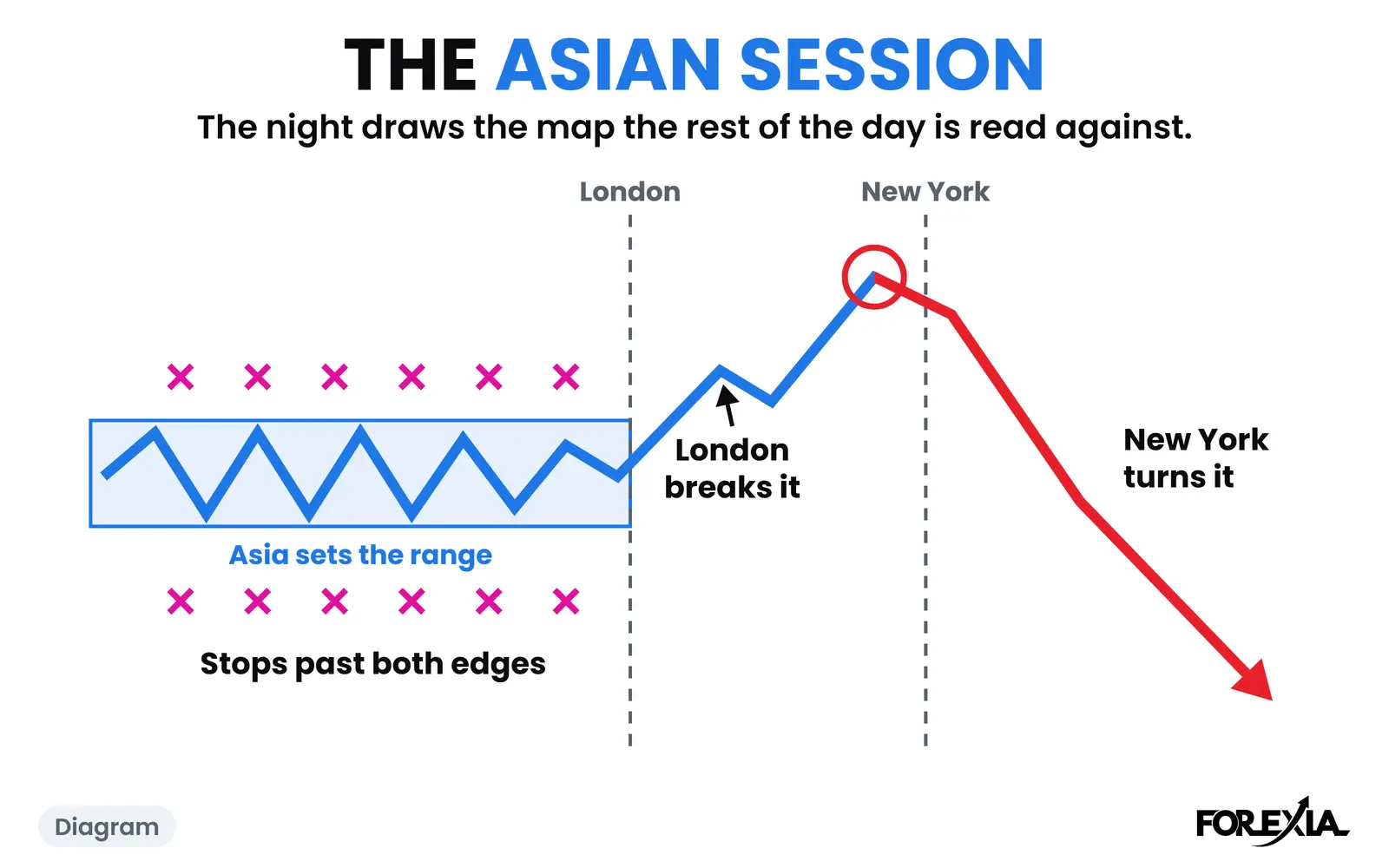
Asia left a 22-pip range, 0.71306 to 0.71526. Drawn on the chart, that is the Asian Box. Its low printed at 01:00 New York, so by the London open every chart had it. The book calls that low support, says buy, and puts the stop a few pips under it.
At 04:45 a candle dropped through to 0.71259, 5 pips under. By 06:00 price had reached 0.71210, about 10 pips under. Nothing on our calendar lined up with that low. Then it turned, and by 11:30 price was at 0.71752, 54 pips off the low, with US jobs data at 08:15 on the way up.
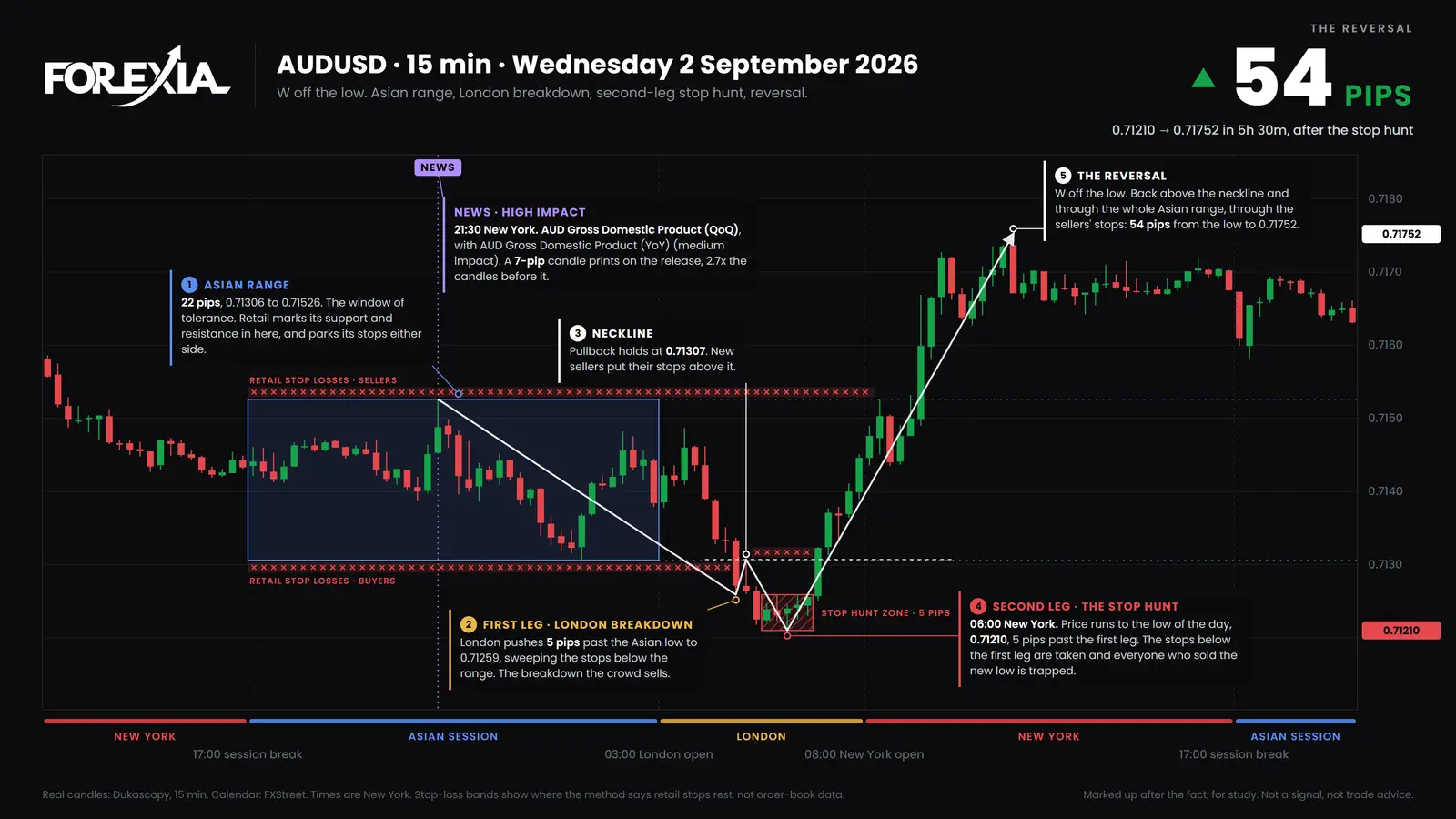
Now picture two buyers at that support. One is anxious and checks the chart every minute. The other is relaxed, sized sensibly and followed the plan exactly. Both had the direction right, and both were out by 05:15. Calm did nothing for the second buyer, because calm does not change where the stop sits.
That is the point the usual advice misses. "Be more disciplined" is a good answer to a broken rule. It says nothing about a rule you share with everyone who read the same book.
Why do fear and greed send the same order?
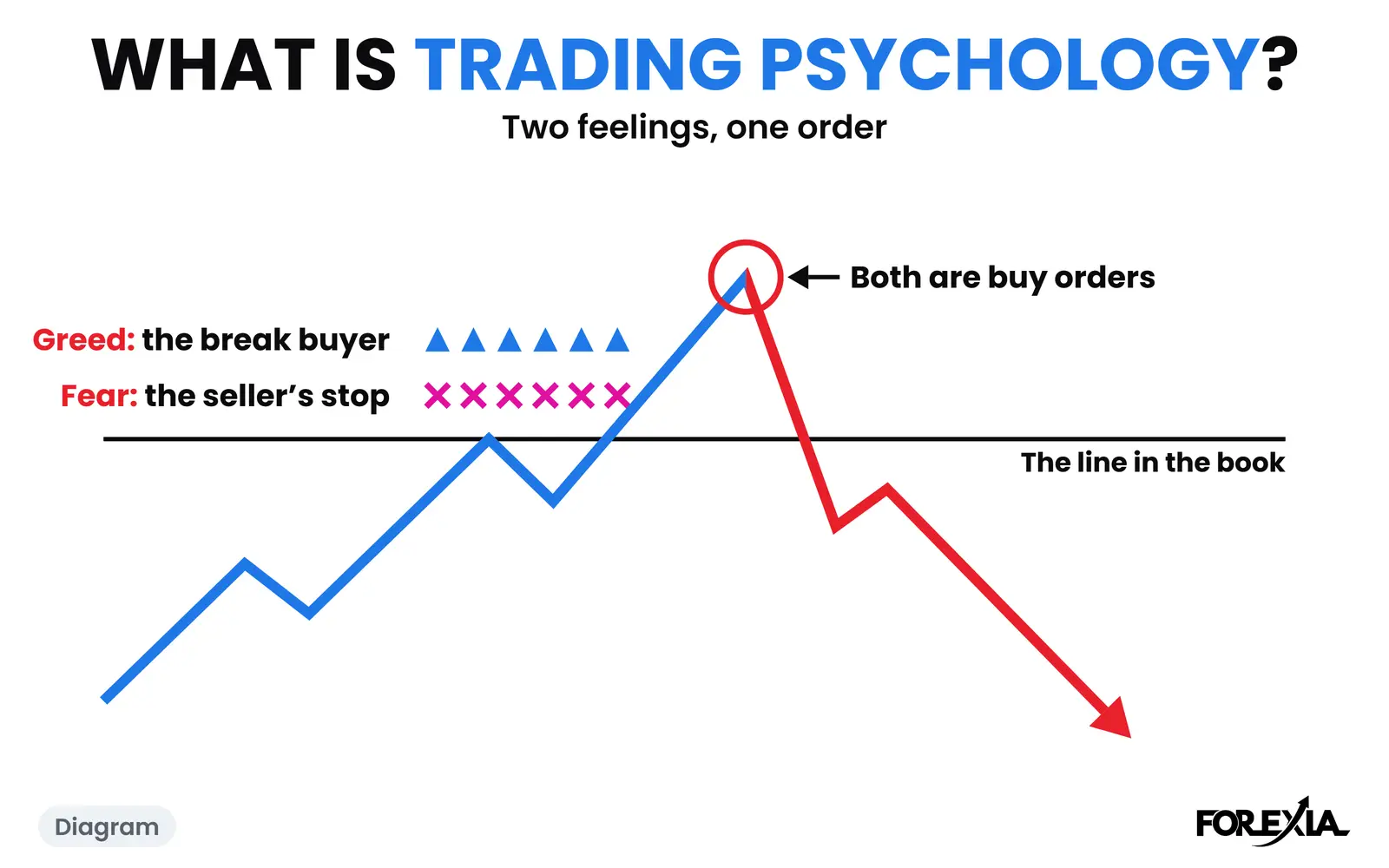
Because over a level, a seller's stop and a breakout buyer's entry are both orders to buy. USD/CHF on Friday 18 September 2026 shows them in the same few pips.
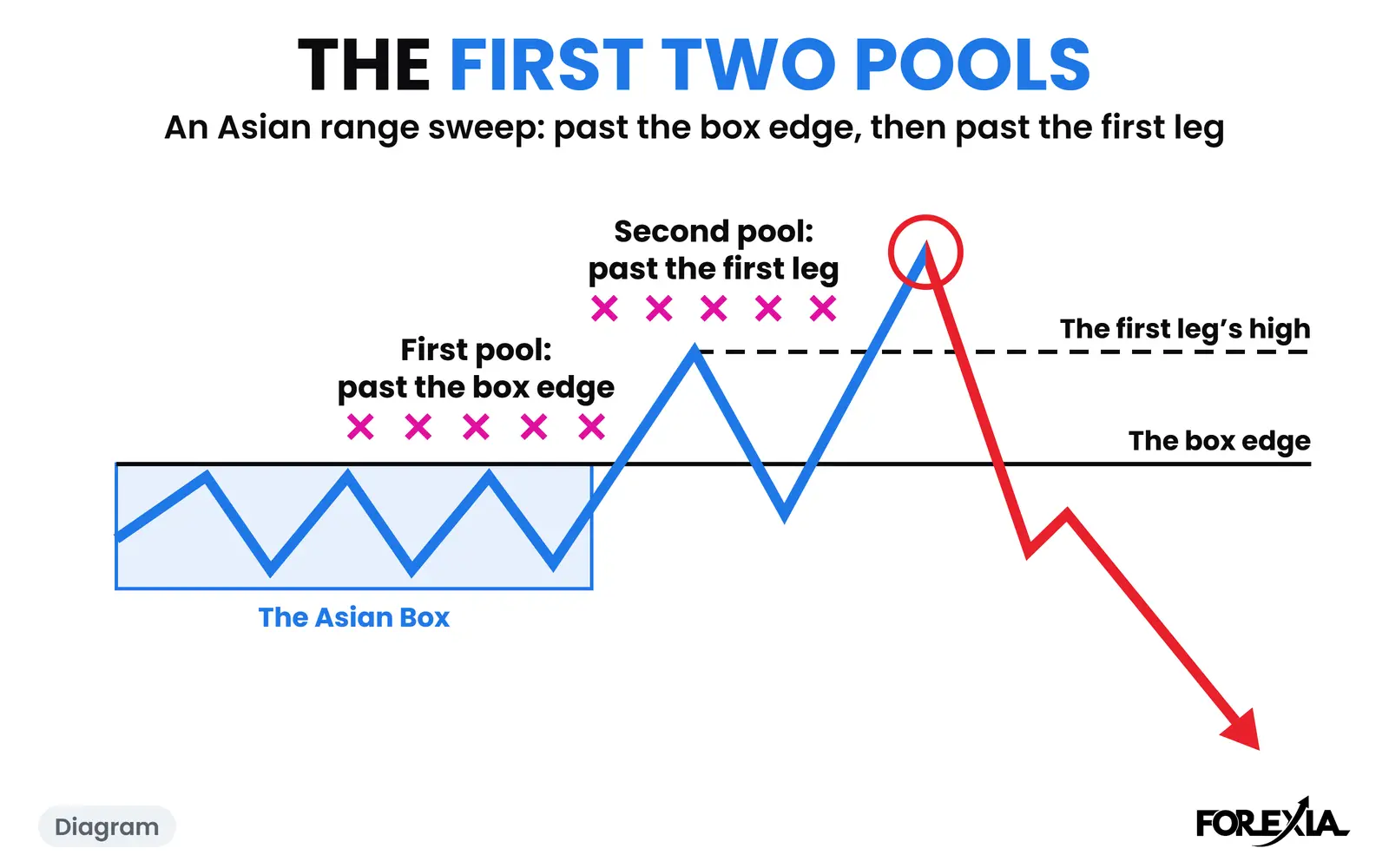
The box ran from 0.82254 to 0.82521, and the 03:30 candle tapped its top. A textbook calls that resistance, says sell, and puts the stop just over it. At 06:45 London pushed to 0.82549, 3 pips over, and pulled back to 0.82464 by 07:00. At 08:15 price reached 0.82596, 5 pips past that first push, with no release at that candle. US industrial production, medium impact, came an hour later.
Follow the two feelings. The seller is watching a loss grow, and the stop goes. The buyer has watched a rising morning and fears missing it, and now there is a new high to buy. One is fear and the other is greed, and they arrive as the same order at the same price.
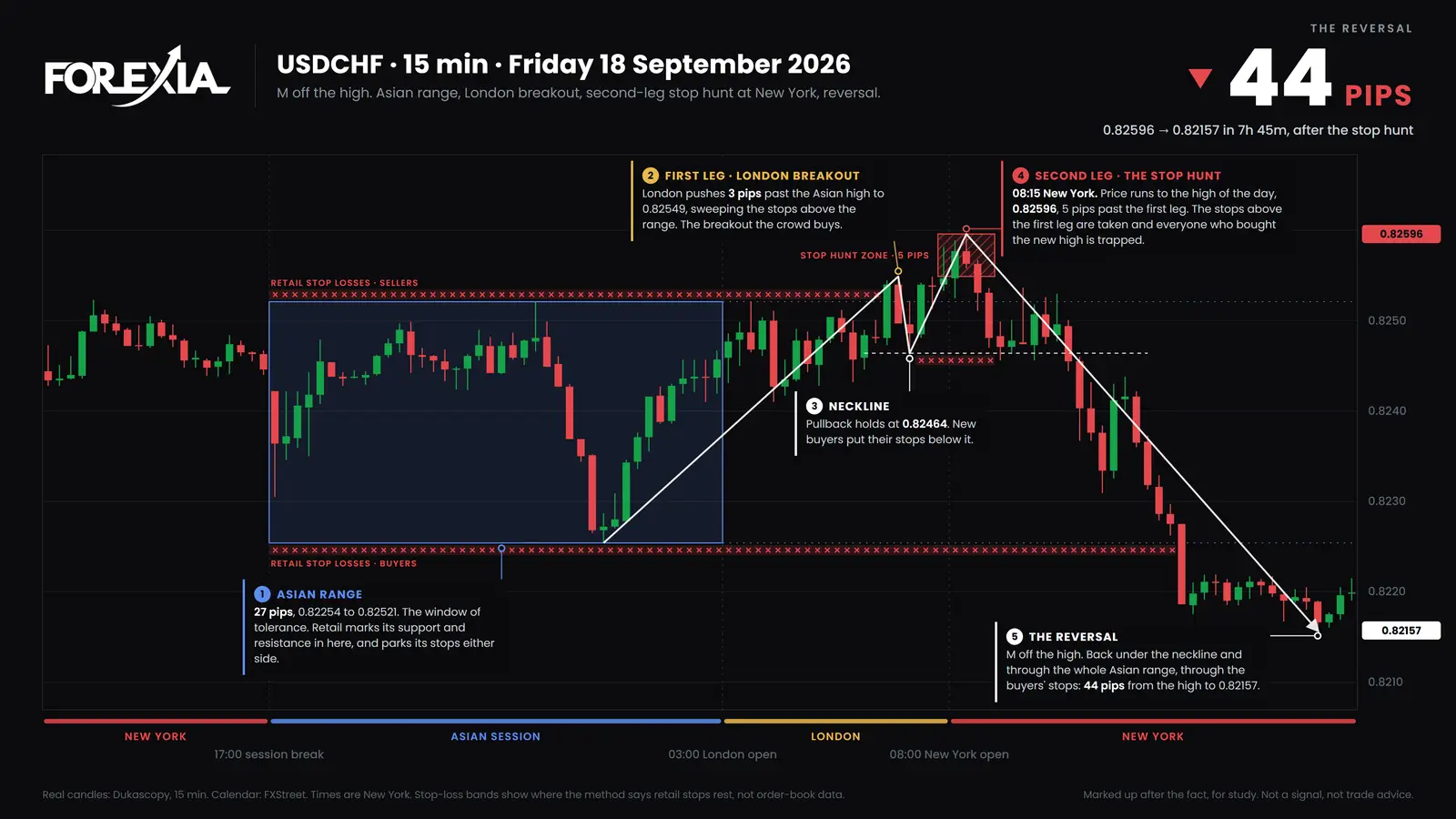
The 08:45 candle closed at 0.82481, back inside the box. By 16:00 price was at 0.82157, 44 pips off the high and through the bottom of the box. The seller was right about the direction and was no longer in the trade.
What did each seat read on that morning?
The same candles read differently from each of the three seats. Reading from all three on purpose is Perceptual Positioning.
- Retail saw resistance, then a breakout. It felt fear or urgency, depending on which way it was positioned.
- The market maker, as we read it, saw buy orders collected in a small space. Anyone needing to sell size needs buyers. Nobody outside can see those orders, so this seat is an inference. We also keep retail traders vs institutional traders on its own page.
- The observer felt neither. It knew what each side wanted, and it waited for a candle to close before calling the move anything.
The crowd we are describing has a name of ours too. Dumb Money means predictable, not stupid: plenty of clever people trade from the first seat.
What can trading psychology fix, and what can it not?
It can close the gap between your plan and your order. It cannot make the plan good.
We tested that as directly as we could. A program with no fear, no greed and no bad mornings ran our own setup as a fixed rule, and it lost money after costs. A perfectly disciplined trader following that rule would have had the same result. Both days on this page reversed, and they are here because they reversed. A turn seen afterwards is not a setup.
So when a trade goes wrong there are at least three separate questions. Did I follow my plan? Is the plan any good after costs? Whose plan was it? The first is psychology in the usual sense, and the last is the one this page adds. Leverage and costs play their part as well, and why most traders lose sets out what regulators have and have not measured.
How do you work on your trading psychology?
Start by seeing what you do. The advice on every ranking page is sensible: write a plan, keep a journal, set a loss limit, take breaks. A one-page routine is on the hub. We found no controlled study showing that any of it raises a retail trader's results, so it is a way to see yourself and not an edge.
The AUD/USD day suggests one more line for that journal. That buyer's stop sat a few pips under a low that was on every chart from 01:00, nearly four hours before it went. A stranger could have marked it without asking, and no breathing exercise would have told the buyer so. Reading a forex chart includes that: what the same chart is telling everyone else.
Common mistakes
Each of these takes a real point too far.
- Deciding the textbook is wrong and doing the opposite. On both days the textbook direction came: up from AUD/USD's support, and down from USD/CHF's resistance. The cost was where the stop sat, and a trader who did the opposite of the book would have had the direction wrong on both.
- Treating every loss as a feeling. The relaxed buyer on AUD/USD had nothing to fix in their head. Some losses come from the rule, some from the crowd you share it with, and some are just the market.
- Reading only your own trade. A level you mark is everyone's level. The 3-pip push over USD/CHF's box took the stops of traders who never looked past their own entry.
Course 1 of ForexiaPRO, Reading the Map, teaches this read step by step in lesson 1.1.1, The Chart You Were Taught to Read.
Frequently asked questions
What are the main emotions in trading?
Fear and greed are the two every list starts with, followed by hope, regret and the urge to win a loss back. They are real, and at a level they can send the same order: on USD/CHF on 18 September 2026 a frightened seller's stop and an eager buyer's chase were both buy orders in the same few pips.
Does good trading psychology make you profitable?
No. It can stop you making a sound plan worse, and it cannot make a plan sound. A program with no fear or greed ran our own setup as a fixed rule and lost money after costs. That test does not measure a person reading a chart, but it does show that calm alone is not enough.
Can you learn trading psychology?
You can practise the habits: writing your reason before the click, keeping a record of what you did and felt, stopping for a set time after a loss. We found no controlled study showing that these raise a retail trader's results, so treat them as a way of seeing what you do, not as an edge.
How does trading psychology relate to reading a forex chart?
What you see on a chart is partly what you were taught to see. Support, resistance and the breakout came from the same books for millions of traders, so they see the same line and place the same stop. Asking who else has drawn that line is a psychological step as much as a technical one.